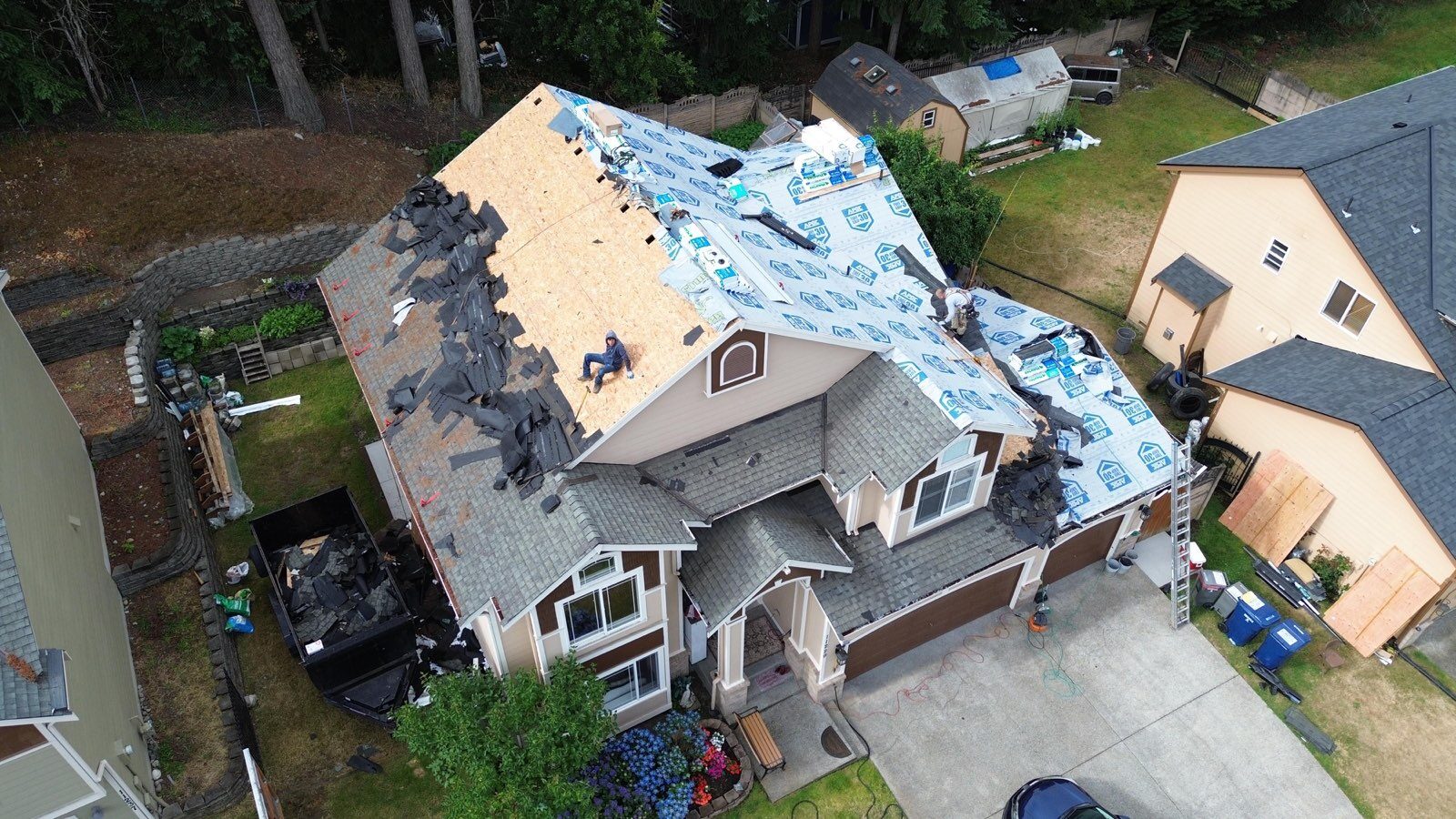
There is no single reliable price for every roof repair. A lifted shingle near an open roof edge is a different project from a leak that begins around a chimney, travels beneath the roofing, and damages the deck before appearing indoors. For a homeowner researching roof repair in Tacoma, WA, the useful question is not only “How much will it cost?” but also “What work is needed to correct the source of the problem?”
A sound estimate should connect the proposed work to observed conditions. It should explain what will be removed, repaired, replaced, sealed, or tested and identify any uncertainty that cannot be resolved until materials are lifted. Understanding the following cost factors makes it easier to compare estimates on their scope rather than choosing from totals alone.
The type and location of the roof problem
Roof problems vary in complexity. Replacing a small area of damaged shingles may involve a straightforward material match and installation. Repairs at valleys, skylights, plumbing vents, chimneys, wall intersections, or other penetrations usually require more detailed flashing work. These areas must manage water flowing from multiple directions, so the repair may extend beyond the spot where moisture first became visible.
Leak location also affects diagnostic time. Water can move along underlayment, decking, fasteners, or framing before reaching a ceiling. The stain inside a room may therefore be several feet from the exterior entry point. A professional inspection may need to evaluate both the roof surface and accessible attic conditions to distinguish an active roof leak from condensation, plumbing, or another moisture source.
How much roofing must be removed
A durable repair needs enough working area to integrate new material with the existing roof. That can mean carefully lifting intact shingles around the damaged section, removing failed flashing, or opening an area large enough to inspect what lies below. A tiny patch placed only over the visible symptom may not address water entering higher on the roof.
The size of the repair matters, but square footage alone does not determine labor. A compact repair with several intersections and custom flashing can take more time than a larger, simple shingle area. Estimates should describe the repair boundaries and how the new work will tie into the surrounding roof system.
Roofing material and product availability
Asphalt shingles, metal panels, and low-slope membranes use different materials, tools, and repair methods. Even within one category, profiles, colors, fastening systems, and manufacturer requirements differ. Matching an older or discontinued product may be difficult, and a close visual match is not necessarily an exact functional match.
A contractor should explain whether compatible material is available and whether an exact color match is realistic. Sun exposure and normal aging can change the appearance of an existing roof, so newly installed material may remain visible even when the correct current product is used. This is an appearance issue to discuss before work begins, not a reason to substitute an incompatible component.
Decking, underlayment, and concealed damage
The visible roof covering is only one part of the assembly. Underlayment, decking, flashing, ventilation components, and structural framing all affect performance. If moisture has softened or deteriorated the roof deck, new shingles cannot simply be fastened securely over it. The affected decking may need to be removed and replaced before the exterior covering is restored.
Concealed conditions create one of the most important differences between a preliminary estimate and a final repair scope. No contractor can confirm every covered condition from the ground. A clear proposal should say how unforeseen decking or underlying damage will be documented and authorized if discovered. That process protects the homeowner from vague additions while allowing necessary work to proceed transparently.
Roof pitch, height, and safe access
A single-story, walkable roof with clear access is different from a steep or multi-level roof above landscaping, additions, narrow side yards, or overhead obstacles. Crews may need additional fall protection, staging, material handling, or site protection to complete the same repair safely. Difficult access can also slow debris removal and cleanup.
Homeowners can help an estimator by identifying gate locations, pets, delicate landscaping, and known access restrictions. The contractor should determine the appropriate work methods and safety equipment. Access planning belongs in the project scope; it should never depend on a homeowner getting onto the roof.
Urgency and temporary protection
An active leak may require temporary protection before a permanent repair can be scheduled. Emergency stabilization and the final repair are separate tasks, and temporary work should not be confused with a completed roofing solution. Interior water should be contained only where it is safe to do so, and electrical fixtures or sagging ceilings near water should be treated cautiously.
Prompt attention can limit ongoing exposure, but urgency should not eliminate basic documentation. Ask what the temporary measure is intended to accomplish, what remains to be repaired, and how the permanent scope will be assessed.
What a useful Tacoma roof repair estimate should include
Comparable estimates need comparable details. Look for the location and cause of the suspected problem, the materials to be removed and installed, flashing or underlayment work, cleanup, access considerations, and the process for handling concealed damage. The proposal should also distinguish recommended repairs from optional maintenance.
Ask questions if one estimate covers only the surface material while another includes flashing or deck work. The lower total may represent a narrower scope rather than better value. Photos and plain-language explanations can help you understand why each step is proposed.
Repair now or consider replacement?
A localized defect on an otherwise serviceable roof may be a reasonable repair candidate. Widespread deterioration, repeated leaks in separate areas, extensive deck damage, or difficulty integrating new materials may change the discussion. The decision should reflect the roof’s actual condition, the extent of the current problem, and how long a repair is reasonably expected to serve—not pressure or a generic rule based only on age.
RSV Roofing LLC provides inspections and roof repair services in Tacoma and surrounding Pierce County communities. For an estimate based on your roof’s specific condition, call (360) 241-4434 or contact RSV Roofing LLC.